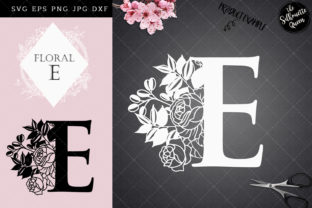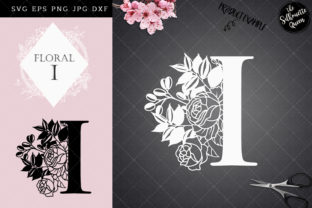
Evaluating K - Floral Letter Design - Paper Cut for Creative Projects
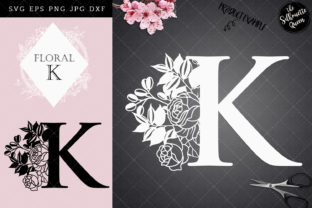
Selecting the right typographic asset is a foundational step in graphic design, crafting, and digital content creation. The K - Floral Letter Design - Paper Cut represents a specific niche within decorative typography: a silhouette-based letterform that merges organic botanical elements with the aesthetic of traditional paper cutting. For designers, crafters, and educators evaluating this asset, understanding its technical specifications, aesthetic applications, and practical limitations is essential for determining whether it aligns with current project requirements. This evaluation focuses on the utility of the included file formats, the versatility of the black silhouette style, and the specific contexts where this design excels or falls short.
Understanding the Asset Composition
The primary value proposition of the K - Floral Letter Design - Paper Cut lies in its multi-format delivery system. Unlike raster-only images, this package includes five distinct file types: SVG, PNG, EPS, JPG, and DXF. Each format serves a specific function in the creative workflow, and evaluating the necessity of these formats helps determine the asset's return on investment.
- SVG (Scalable Vector Graphics): This is often the most critical file for modern web design and Cricut/Silhouette users. As an XML-based vector format, it allows for infinite scaling without pixelation and supports direct code manipulation for web animations or color changes.
- EPS (Encapsulated PostScript): The industry standard for professional print design and logo creation. EPS files maintain vector integrity when opened in Adobe Illustrator or CorelDRAW, making them essential for high-resolution commercial printing.
- DXF (Drawing Exchange Format): Specifically designed for CAD and laser cutting software. If the intention is to physically cut this floral K from wood, acrylic, or cardstock using industrial equipment, this format ensures precise pathing.
- PNG (Portable Network Graphics): A raster format with transparency support. This is the practical choice for quick mockups, digital scrapbooking, or overlaying the letter onto existing backgrounds without needing vector software.
- JPG (Joint Photographic Experts Group): A compressed raster image best suited for reference, low-resolution web use, or situations where transparency is not required.
When evaluating this asset, consider which of these formats you will actively utilize. If your workflow is strictly limited to basic word processing or simple social media posts, the inclusion of EPS and DXF files may be superfluous. However, for users operating across both digital and physical fabrication mediums, this comprehensive bundle reduces the need for manual file conversion.
The Strategic Advantage of Black Silhouettes
The design is presented as a solid black silhouette. While this may initially appear restrictive compared to full-color illustrations, it offers significant functional advantages for customization. In vector editing software, a unified black shape acts as a neutral canvas. Users can apply gradients, textures, or brand-specific color palettes without having to isolate and recolor individual floral petals or stems.
This monochromatic approach also enhances compatibility with cutting machines. Vinyl cutters and plotters rely on high-contrast paths to define cut lines. A pre-made black silhouette eliminates the need for threshold adjustments or trace operations that are often required when converting colored photographs or complex illustrations into cuttable files. For projects like wedding invitations, nursery art, and custom stickers, this ready-to-cut state significantly streamlines production time.
Ideal Use Cases and Applications
The K - Floral Letter Design - Paper Cut is particularly strong in scenarios requiring a blend of elegance and organic texture. Evaluating your specific project against these proven use cases can help confirm suitability:
Wedding and Event Stationery
Floral typography is a staple in wedding design. This specific K is well-suited for monograms, table numbers, or welcome signage. The paper-cut aesthetic adds a tactile, handcrafted feel that pairs well with textured cardstocks and letterpress printing. Because it is a single letter, it integrates easily into existing suite designs without overwhelming the layout.
Nursery and Children’s Art
Educational resources and nursery decor often utilize alphabet imagery. The soft, rounded nature of floral letterforms avoids the harshness of geometric sans-serifs, making it appropriate for early learning materials, name signs, and growth charts. The silhouette style allows parents or educators to match the letter to existing room themes or curriculum colors effortlessly.
Print-on-Demand and Apparel
For t-shirts, tote bags, and fabric printing, the bold contrast of a floral silhouette ensures readability from a distance. The design complexity is sufficient to look premium but simple enough to withstand various printing methods, including screen printing, heat transfer vinyl, and direct-to-garment (DTG) processes.
Tradeoffs and Limitations
Objective evaluation requires acknowledging where this asset may not be the optimal choice. Understanding these tradeoffs prevents frustration during the design process.
Standalone vs. Complete Set: This product is a single letter "K." If your project requires full words or phrases, purchasing individual letters separately can become cost-prohibitive and stylistically inconsistent if other letters are sourced from different designers. This asset is best evaluated as a supplement to an existing collection or for projects specifically featuring the letter K (e.g., names like Katherine, Kevin, or keywords like "Kindness").
Style Specificity: The paper-cut aesthetic implies a certain level of intricacy. While beautiful, fine details may be lost when scaling down for small applications like business cards or pen engraving. Conversely, at massive scales for wall murals, the silhouette may lack internal detail unless the user manually adds texture or shading. It is not a universal solution for all size ranges.
Editing Requirements: While the black silhouette is easy to recolor, it does require some proficiency with image editing software to unlock its full potential. Users expecting a drag-and-drop solution for professional branding may find the raw files require more manipulation than anticipated. Those without access to vector software will be limited to the PNG and JPG files, negating the scalability benefits.
Decision-Making Framework
To determine if the K - Floral Letter Design - Paper Cut aligns with your goals, consider the following practical insights:
- Assess Format Compatibility: Verify that your hardware (cutting machine, printer) and software (Illustrator, Inkscape, Cricut Design Space) support the provided SVG, EPS, or DXF files before acquisition.
- Evaluate Scalability Needs: If you intend to use this design across multiple sizes—from sticker to billboard—the vector formats are non-negotiable. If usage is restricted to web-only at fixed dimensions, a simpler raster alternative might suffice.
- Consider Licensing Terms: Always review the specific license associated with the download. Determine whether commercial use, print-on-demand sales, or educational distribution is permitted. The technical suitability of the file does not override legal usage restrictions.
- Analyze Design Cohesion: Place the floral K alongside your existing brand assets or project mood board. Does the weight of the stem and the density of the flowers match your current typography? Consistency is key for professional results.
Ultimately, the K - Floral Letter Design - Paper Cut serves as a specialized tool rather than a general-purpose font. It offers high utility for users who need a versatile, editable, and fabrication-ready decorative element. By weighing the technical benefits of multi-format vector delivery against the constraints of single-letter availability and style specificity, creators can make an informed decision that supports both their artistic vision and practical workflow efficiency.