Best Mom Ever with Floral Elements: Integrating Versatile Design Assets into Creative Workflows
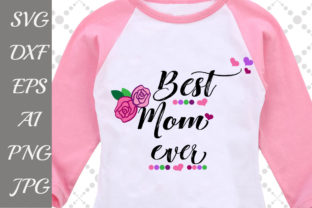
In the landscape of digital design and print-on-demand production, asset versatility is a primary driver of efficiency. For creators, small business owners, and hobbyists managing tight deadlines or diverse product lines, finding a single design file that adapts across multiple mediums is essential. The "Best Mom Ever with Floral Elements" digital package serves as more than just a seasonal graphic; it functions as a foundational asset within a broader creative workflow. By providing a comprehensive suite of file formats including SVG, DXF, AI, EPS, PNG, and JPG in a single zipped archive, this resource eliminates the friction often associated with format conversion and compatibility testing.
Understanding where this asset fits into your production pipeline requires looking beyond the aesthetic appeal of the floral typography. It represents a streamlined solution for multi-platform execution. Whether you are preparing for a Mother’s Day marketing campaign, designing personalized stationery, or setting up cut files for vinyl applications, having immediate access to both vector and raster formats allows for rapid prototyping and final production without returning to the drawing board. This integration of form and function supports a process-oriented approach to crafting, ensuring that time is spent on customization and quality control rather than technical troubleshooting.
Technical Specifications and Workflow Compatibility
The inclusion of six distinct file types addresses specific technical requirements across different hardware and software ecosystems. Understanding the practical application of each format ensures you select the correct asset for the task at hand, maintaining quality and reducing processing time.
- SVG (Scalable Vector Graphics): This is the industry standard for electronic cutting machines like Cricut and Silhouette. In a workflow context, the SVG file preserves individual layers and nodes, allowing for precise weeding and color separation. It is mathematically defined, meaning it can be resized infinitely for large banners or small gift tags without pixelation.
- DXF (Drawing Exchange Format): Essential for users operating older versions of cutting software or industrial plotters that do not natively support SVG. Including DXF ensures backward compatibility, preventing workflow bottlenecks for makers using legacy equipment.
- AI and EPS (Adobe Illustrator / Encapsulated PostScript): These are professional-grade vector formats required for commercial printing and advanced editing. If your process involves modifying the floral elements, changing typography, or integrating the design into a larger branding kit, these files provide full editability within Adobe Creative Cloud or CorelDRAW environments.
- PNG (Portable Network Graphics): With a transparent background, the PNG is optimized for sublimation printing, direct-to-garment (DTG) transfers, and digital mockups. It serves as the bridge between vector design and raster-based printing workflows, retaining high resolution at 300 DPI for crisp physical outputs.
- JPG (Joint Photographic Experts Group): While less versatile for editing, the JPG is crucial for quick previews, social media promotion, or low-resolution proofing. It allows for rapid sharing with clients or team members during the approval phase before committing to high-fidelity production.
Pre-Production Planning and Asset Organization
Efficient implementation begins before the software is even opened. Integrating "Best Mom Ever with Floral Elements" into your routine starts with proper digital asset management. Upon downloading the zipped file, extract the contents immediately and organize them into a structured folder system. A recommended hierarchy might separate vectors from rasters, or organize by project type such as "Apparel," "Stationery," and "Marketing." This preparation step reduces cognitive load during active creation sessions.
During the planning phase, assess the end-use requirements against the available formats. If the project involves sublimating onto polyester shirts, verify that the PNG resolution matches your printer’s native DPI settings. If creating layered vinyl decals, open the SVG in your cutting software first to check node count and layer grouping. Performing these compatibility checks during the pre-production stage prevents material waste and machine errors later in the process. For entrepreneurs managing inventory, this is also the moment to determine if the floral elements can be isolated and reused for other products, maximizing the return on investment for this single design asset.
Execution Across Physical and Digital Mediums
The true value of this design package emerges during the execution phase, where the asset transitions from a digital file to a tangible product or published content. The workflow varies significantly depending on the output medium, but the centralized source file simplifies adaptation.
Sublimation and Apparel Production
For apparel creators, the PNG file is typically the workhorse. When sublimating onto shirts, tote bags, or tumblers, color accuracy and transparency are paramount. Because the floral elements are integrated with the text, ensure your heat press settings account for the density of the ink coverage. The design’s composition allows for easy placement on various garment sizes; however, always utilize the vector version (AI/EPS) if you need to adjust the aspect ratio to fit a specific print area without distorting the floral details. This flexibility is critical when fulfilling custom orders that require size-specific adjustments.
Vinyl Cutting and Signage
When producing car decals, window clings, or wooden signs, the SVG and DXF files take precedence. A practical tip for this workflow is to test the smallest floral detail before running a full batch. Intricate floral elements can sometimes present weeding challenges depending on the vinyl brand and blade sharpness. By utilizing the editable vector file, you can simplify nodes or weld overlapping paths specifically for the cutting process without altering the original master file. This iterative refinement is part of a sustainable production workflow, ensuring consistency across dozens or hundreds of units.
Stationery and Paper Goods
For invitations, cards, and wrapping paper, the design serves as a focal point or a repeating pattern. Using the AI or EPS file in layout software like Adobe InDesign or Affinity Publisher allows for seamless integration with body text and other graphical elements. Here, the "Best Mom Ever with Floral Elements" asset acts as a modular component. You might use the full design for a greeting card cover, but isolate just the floral corner elements for matching thank-you notes or gift tags. This modular approach creates visual cohesion across a product suite while minimizing the number of unique assets you need to manage.
Post-Production Quality Control and Archiving
After production, the workflow extends to quality assurance and long-term asset maintenance. Evaluate the physical output against the digital proof. Did the floral details hold up during the weeding process? Was the sublimation color vibrant enough? Documenting these observations creates a feedback loop that informs future projects. If modifications were made to the SVG for better cutting performance, save this optimized version alongside the original master file. Labeling conventions such as "BestMom_Floral_SVG_Optimized_Cricut" prevent confusion and preserve institutional knowledge, which is especially valuable for teams or businesses scaling their operations.
Archiving is equally important. Keep the original zipped file intact as a backup reference. Over time, software updates or new hardware acquisitions may change how files interact. Having the pristine source package ensures you can always re-extract unmodified assets if needed. For digital marketers and bloggers, archiving the JPG and PNG versions in a cloud-based media library facilitates quick access for future social media posts or email newsletters, extending the lifecycle of the design well beyond its initial seasonal relevance.
Strategic Integration for Business and Personal Projects
For professionals and entrepreneurs, this asset supports broader business goals beyond simple creation. It enables rapid response to market trends. When Mother’s Day approaches, having a pre-vetted, multi-format design ready for deployment shortens the time-to-market for new products. This agility is a competitive advantage in the print-on-demand space. Furthermore, the high-quality nature of the vector files ensures that your brand maintains a professional appearance across all touchpoints, from premium packaging to digital advertising.
Educators and community organizers can leverage the design for notices, certificates, and event materials. The ability to scale the design without quality loss means a single file can serve as both a small badge on a certificate and a large header on a banner. This economy of effort aligns with productivity-minded workflows where resources must be maximized. Similarly, freelancers offering design services can use this asset as a base template, customizing colors or adding client-specific names efficiently. The layered structure of the vector files facilitates this personalization, turning a static download into a dynamic service offering.
Ultimately, successful utilization of "Best Mom Ever with Floral Elements" relies on treating it as a flexible production component rather than a finished image. By understanding the technical strengths of each included format and embedding the asset into a structured workflow—from organization and pre-flight checks to execution and archiving—creators can achieve higher quality outputs with greater efficiency. This systematic approach transforms a simple digital download into a reliable tool for consistent, professional-grade results across a wide spectrum of creative and commercial applications.