Floral Collection: Integrating Fulmala Assets into Professional Design Workflows
In the landscape of digital and print design, maintaining a consistent visual identity while managing tight deadlines requires more than just creative talent; it demands a reliable library of high-quality assets. The Floral Collection, featuring the Fulmala set, serves as a foundational resource for designers, marketers, and entrepreneurs who need to bridge the gap between bespoke artistry and efficient production. Rather than viewing these assets merely as decorative elements, professionals should approach them as modular components within a broader design system. This collection provides the necessary versatility to handle diverse projects ranging from corporate branding to intimate wedding stationery without sacrificing the organic authenticity that hand-drawn illustrations provide.
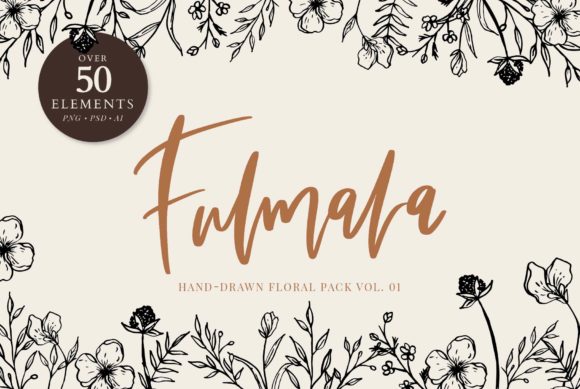
The true value of this collection lies in its technical composition and format variety. By including 34 hand-drawn botanical illustrations available in PNG, PSD, and AI formats, the collection addresses multiple stages of the creative pipeline. The division between 17 filled illustrations and 17 outline-only versions is particularly significant for workflow efficiency. Filled assets are ideal for immediate placement in social media graphics or blog headers where visual impact is paramount. Conversely, the unfilled line art versions serve as structural bases for customization, allowing designers to apply specific brand color palettes or create duotone effects directly within Adobe Illustrator. This duality eliminates the need to redraw elements when client requirements shift, preserving both time and artistic integrity.
Strategic Asset Management and File Compatibility
Effective integration of the Floral Collection begins with proper file management and understanding format utility. For professionals working across different platforms, having access to source files (AI and PSD) alongside rasterized exports (PNG) ensures compatibility whether you are designing a billboard or an Instagram story. The vector-based AI files are essential for scalability in packaging design and large-format printing. Because these are hand-drawn elements digitized into vectors, they retain their organic texture at any resolution, avoiding the pixelation issues common with purely raster floral packs.
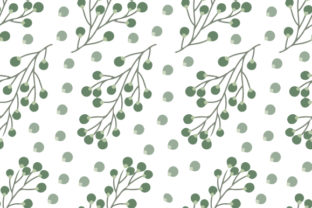
When organizing these assets for team use or long-term projects, consider categorizing them by function rather than just appearance. Grouping the 16 seamless patterns separately from individual elements streamlines the selection process during the layout phase. The collection includes eight patterns with backgrounds and eight with transparent backgrounds. In a practical workflow, transparent patterns are invaluable for layering over colored blocks or photography in web design, while patterns with pre-set backgrounds work efficiently for quick mockups, book covers, or textile printing where a base tone is already established. Understanding this distinction prevents unnecessary masking work later in the production cycle.
Application in Branding and Identity Systems
Branding projects require assets that can adapt to various touchpoints without losing coherence. Fulmala’s botanical illustrations function effectively as secondary brand elements that support primary logos. During the mood boarding and concept phase, the hand-drawn nature of these florals helps establish an emotional tone that geometric shapes cannot achieve. For logo design, the intricate details of the botanical elements can be simplified or extracted to create custom monograms or iconography that feels unique to the client.
Beyond the logo itself, consistency in collateral design is where this collection proves most useful. When creating business cards, letterheads, or brochures, using the same set of floral elements ensures that physical materials feel connected to digital presence. The inclusion of three floral wreaths and two floral frames specifically targets this need for structured decoration. These pre-composed assets act as containers for text or photography, providing instant hierarchy and focus. For small business owners or freelancers managing their own branding, these frames reduce the cognitive load of composition, allowing for professional-looking results without extensive layout training.
Streamlining Wedding and Event Stationery Production
The wedding industry operates on high volume and strict personalization standards. The Floral Collection integrates smoothly into stationery workflows by offering customizable templates alongside raw elements. The two included card templates (available in PNG, JPEG, PSD, and AI) serve as starting points for invitations, save-the-dates, or thank-you notes. For designers handling multiple weddings simultaneously, these templates provide a standardized grid and typography structure that can be rapidly adapted with different floral arrangements from the set.
Customization is key in this sector. Because the assets include both filled and outline versions, designers can easily match specific wedding color schemes. A practical workflow involves setting up master smart objects in Photoshop linked to the AI source files. This allows for global changes across an entire stationery suite. If a client requests a change from sage green to dusty rose, updating the master element propagates the change across invitations, menus, and place cards. The seamless patterns also play a critical role here, often used for envelope liners, table runners, or website backgrounds, extending the floral theme beyond paper goods into the overall event aesthetic.
Digital Content Creation and Social Media Efficiency
For bloggers, educators, and social media managers, content velocity is as important as quality. Stylizing quotes and creating engaging blog graphics requires assets that are visually rich but do not overwhelm the message. The transparent PNG elements in this collection are optimized for drag-and-drop workflows in tools like Canva, Figma, or Adobe Express, while still offering the depth required for professional Photoshop compositions. The hand-drawn aesthetic adds a layer of human touch to digital content, which can increase engagement rates compared to sterile stock photography.
Creating cohesive social media feeds often relies on repetitive visual motifs. Using the seamless patterns as consistent backdrops for quote cards or announcements establishes visual rhythm. The ability to mix filled botanicals with line art allows for variation within that consistency. For example, a carousel post might use a filled floral for the cover slide to grab attention, transition to line art for informational slides to maintain readability, and return to a pattern for the call-to-action slide. This strategic use of asset variations keeps the audience engaged while reinforcing brand recognition.
Advanced Customization and Pattern Generation
While the 16 included seamless patterns offer immediate utility, the real power for advanced users lies in creating proprietary patterns using the individual floral elements. The collection encourages this by providing isolated botanical illustrations that can be recombined. In Adobe Illustrator, designers can utilize the Pattern Options tool to build custom repeats that perfectly match specific packaging dimensions or fabric widths. This capability transforms the Floral Collection from a static library into a dynamic design engine.
When building custom patterns, consider the balance between positive and negative space. The mix of detailed flowers and simpler foliage elements in Fulmala allows for the creation of balanced textures that do not appear cluttered. For packaging design, testing these custom patterns in 3D mockup software before finalizing print files is a crucial quality control step. It reveals how the pattern wraps around corners and how the scale translates to physical products. Having the source AI files means you can adjust the scale or density of the pattern based on these tests without losing quality.
Workflow Integration and Best Practices
To maximize the return on investment for this collection, integrate it into your standard operating procedures. Create a dedicated asset library folder structure that mirrors the collection’s organization: Illustrations (Filled/Outline), Patterns (Solid/Transparent), Frames/Wreaths, and Templates. Tagging these files in asset management software like Eagle or Adobe Bridge with semantic keywords such as "botanical," "vintage," "line art," or "wedding" significantly speeds up retrieval during active projects.
Quality control is another aspect of professional implementation. Always verify the color profile of the assets against your project requirements. While PNGs are typically RGB for screen use, the AI and PSD files should be checked for CMYK compatibility if intended for commercial printing. Converting hand-drawn scans to CMYK can sometimes shift colors unexpectedly; performing a test print or soft proofing early in the process prevents costly reprints. Additionally, keeping the original high-resolution masters archived ensures you always have a fallback if working files become corrupted or if future projects require higher fidelity.
Finally, consider the licensing and ethical use of these assets in commercial work. Understanding the scope of use for the Floral Collection protects both the designer and the client. When delivering final files to clients, flatten layers or outline fonts where appropriate to protect the integrity of the source assets while ensuring the client receives a usable product. Educating clients on how these hand-drawn elements add value to their brand helps justify pricing and reinforces the professional nature of your service. By treating Fulmala not just as a pack of pretty pictures but as a comprehensive design toolkit, creators can elevate their output, streamline their processes, and deliver consistently high-quality results across every medium.